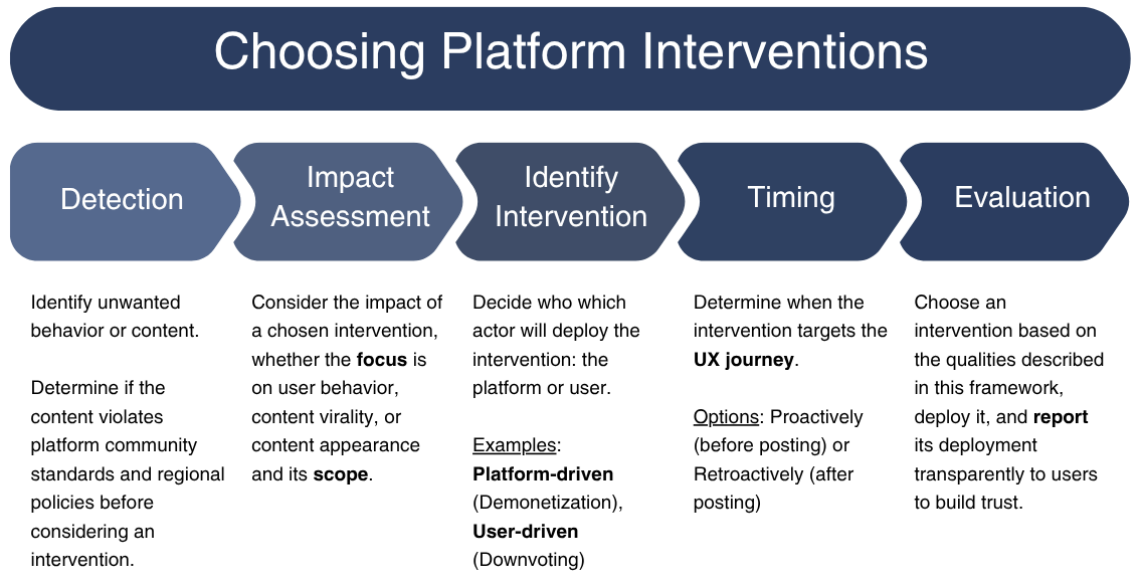
Social media platforms deploy a wide variety of interventions to reduce online harms,
yet efforts to compare or assess these measures are hampered by fragmented definitions
and inconsistent evaluation methods across the industry.
Our research addresses this gap by introducing an action-oriented framework that organizes digital
safety interventions according to four key parameters: focus, scope, driver, and user journey.
Through a systematic analysis of recent interventions across youth-focused social platforms,
including TikTok, Instagram, and YouTube, we show how this taxonomy creates a common language
for classifying interventions and enables more consistent assessment of their design and impact.
Our case study demonstrates that the proposed framework not only streamlines cross- platform comparisons,
but also supplies actionable guidance for designers and policymakers to identify gaps,
measure effectiveness, and build safer digital environments.
By bridging inconsistencies in language and approach,
this work lays a pragmatic foundation for stronger evidence-based policymaking
and supports collaborative efforts to address evolving challenges in the digital safety landscape.
×
Selective Hopping and Stable Path Integration to Boost AODV’s Message Delivery Assurance
P. Kanani, Neel Kothari, L. Kurup, D. patil, and
2 more authors
In International Research Journal of Multidisciplinary Technovation, 2025
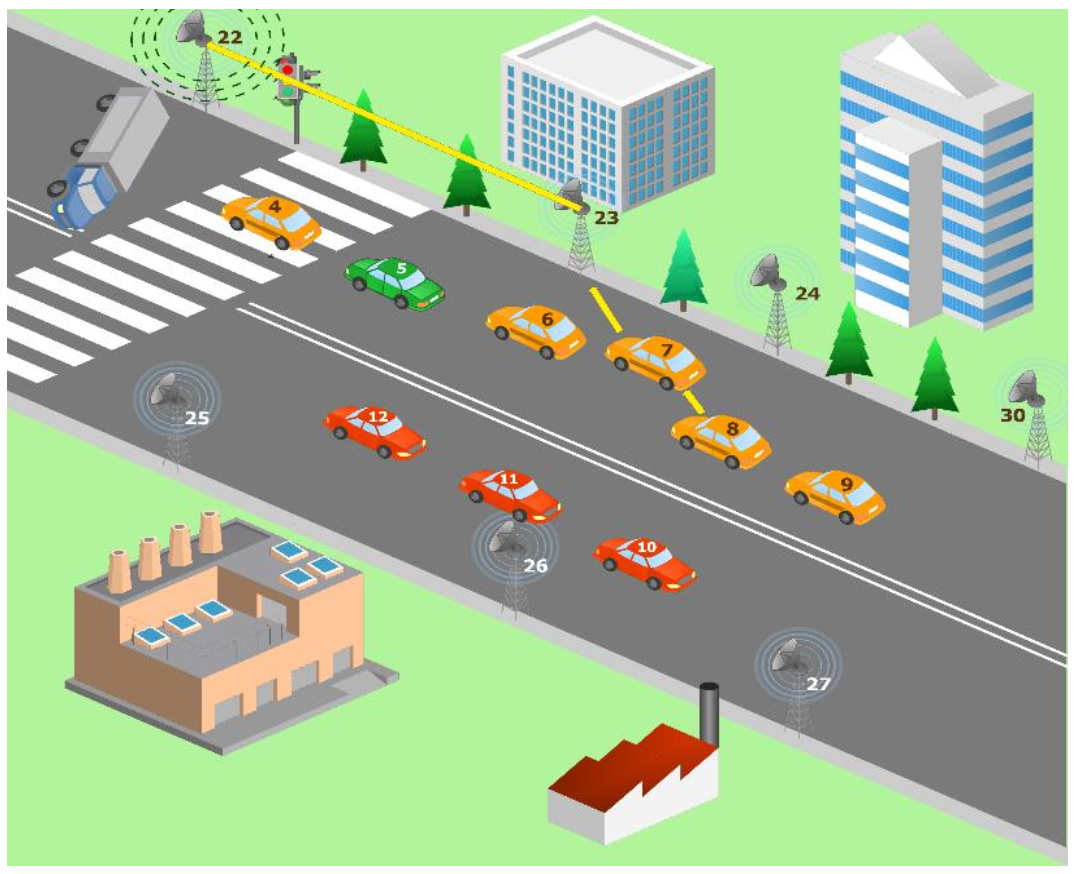
In addition to carrying communications,
Vehicular Ad-hoc Networks can be utilized to transfer vital information
across nodes in the network, potentially averting disastrous losses.
By following the established standards, this vital information is
transmitted by moving cars on the road in conjunction with parked cars.
In this case, the communication is forwarded via a mediator known as a roadside unit.
The Ad-hoc On-Demand Distance Vector (AODV) routing protocol is one of the finest
for such a wireless environment because it can tolerate variations in vehicle density and speed.
Though it performs better than other comparable protocols,
the AODV routing protocol does not show much promise when it comes to unreachable nodes,
unstable forwarding paths, broadcasting storms, and short connection lifetimes.
In order to improve efficiency, this research paper suggests adding multiple Road Side Units,
modifying the conventional AODV routing protocol by adding selective hopping and the Delay Minimization Problem.
To confirm the usefulness of the suggested model in terms of propagation delay,
transmission loss, network lifetime, etc., it is also simulated.
The findings gained support the superiority of the suggested strategy,
laying the groundwork for its wider implementation.
2024
×
Examining the Implications of Deepfakes for Election Integrity
H. Ranka, M. Surana, Neel Kothari, V. Pariawala, and
6 more authors
In The AAAI 2024 Third Workshop on AI for Credible Elections: A Call To Action with Trusted AI
It is becoming cheaper to launch disinformation operations
at scale using AI-generated content, in particular ’deepfake’
technology. We have observed instances of deepfakes in polit-
ical campaigns, where generated content is employed to both
bolster the credibility of certain narratives (reinforcing out-
comes) and manipulate public perception to the detriment of
targeted candidates or causes (adversarial outcomes). We dis-
cuss the threats from deepfakes in politics, highlight model
specifications underlying different types of deepfake genera-
tion methods, and contribute an accessible evaluation of the
efficacy of existing detection methods. We provide this as a
summary for lawmakers and civil society actors to understand
how the technology may be applied in light of existing poli-
cies regulating its use. We highlight the limitations of exist-
ing detection mechanisms and discuss the areas where poli-
cies and regulations are required to address the challenges of
deepfakes.
×
Important Feature Recognition for Credit Card Recommendation System using Predictive Modelling
N. Desai, Neel Kothari, P. Kanani, B. Shah, and
3 more authors
International Journal of Intelligent Systems and Applications in Engineering (IJISAE), 2024
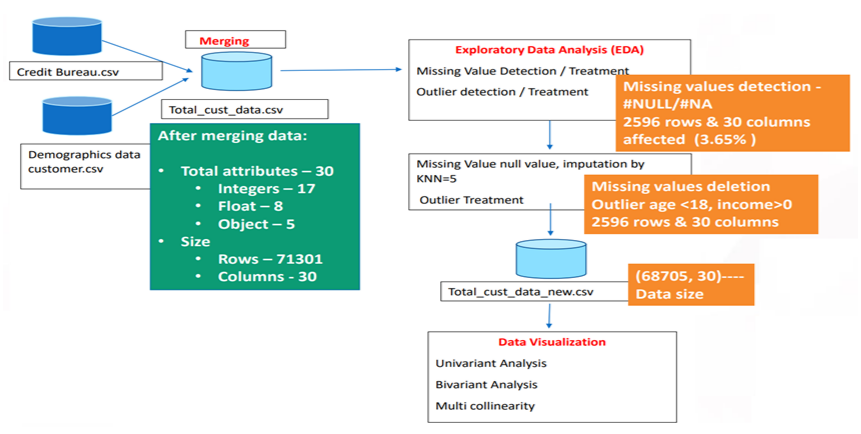
The most popular electronic payment method is a credit card, which is more susceptible to theft due to the rising number of daily electronic transactions. Credit card frauds have cause credit card companies incur huge financial losses. To develop an effective credit scoring model is very imminent to prevent this fraud. In order to support the financial decisions made by banks and other financial organizations, researchers have created sophisticated credit scoring models using statistical and machine-learning techniques. Thus, the main aim of this paper is to help the bank management to develop models and predict consumer behavior on the basis of real time demographic data for credit card issuance. The research also exhibits how to treat data imbalance problem using Synthetic Minority Oversampling Technique (SMOTE) after applying various statistical tests. Different prediction models like Linear Regression, Decision Tree, XGBoost, AdaBoost, Random Forest etc. are also explored and applied on data to pick the best optimized one giving 92.03% accuracy and 97.32% Area Under the ROC Curve (AUC). The relevant parameters which are actually responsible for the identification of credit card fraud are highlighted by applying Weight of Evidence (WoE) and Inflation Variance (IV) techniques to all independent variables, which are able to find parameters having strong predicting power. The findings of such an experimental study can be really useful to bank managers to issue credit cards to customers.
×
Pixels in Puzzlement: Towards Hill Cipher based Image Encryption
Neel Kothari, D. Gada, Mohammed Raza. Syed, S. Muni, and
2 more authors
[ACCEPTED]:NFSU Journal of Cyber Security and Digital Forensics, 2024
×
MobileNet-Based Transfer Learning: A Novel Approach for Improved Alzheimer’s Disease Classification from Brain Imaging
D. Panchal, Neel Kothari, D. Gada, Pratik. Kanani, and
3 more authors
International Journal of Intelligent Systems and Applications in Engineering (IJISAE), 2024
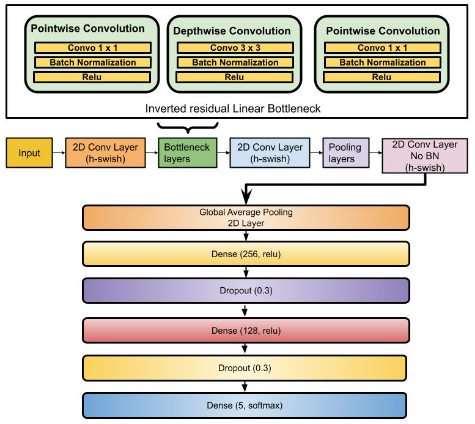
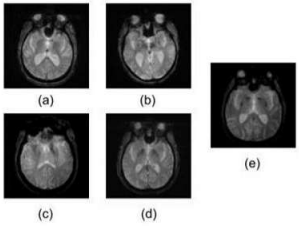
Alzheimer’s can result from various illnesses or incidents that severely impact normal brain functions. While Alzheimer’s Disease (AD) does not have a specific treatment, initial Alzheimer’s disease diagnosis requires neuroimaging, which is among the most promising disciplines for this purpose. It is possible to provide patients with the appropriate care if Alzheimer’s disease is detectedearly. In numerous investigations, machine learning and statistical methods are used to diagnose AD. Deep Learning systems have shown effectiveness similar to that of humans in various fields. The research suggests utilizing deep learning methods such as transfer learning and fine-tuning for classifying and predicting AD. The neural networks DenseNet121, MobileNet, InceptionV3, and Xception are trained using the ADNI 5-class dataset. While the previous state-of-the-art technique achieves an overall accuracy of 86.57%, the proposed MobileNet architecture outperforms it with a validation accuracy of 98% with fine-tuning and 94% without fine-tuning. This research advances the classification of AD through utilizing pre-trained convolutional neural network models, promoting the exploration of unconventional indicators like eye-tracking, memory impairment, and concentration difficulty, amongst others.
2023
×
Optimization of Health-as-a-Service using OptiFog Algorithm
The healthcare industry relies on efficient and fast decision making. This paper aims to expand the Fog
computing and Distributed computing domains to optimize quality of service (QoS) in order to facilitate IoT based
healthcare applications with low latency requirements and developing a smart fog gateway equipped with an optimized
fog algorithm. The purpose of this study is to optimize real-time healthcare data processing using Fog computing,
ensuring dependable, rapid decision-making while minimizing delays caused by data transmission and computation.
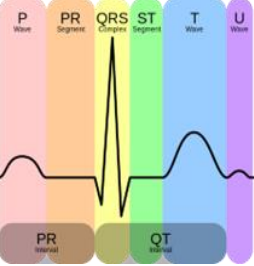
This is also known as Health-as-a-service (HaaS). We conduct an electrocardiography (ECG) analysis utilizing three
computing paradigms: Cloud computing, Fog computing, and a heterogeneous distributed Fog computing setup
employing the dynamic OptiFog algorithm. This algorithm effectively manages computational resources within the
distributed Fog environment, utilizing Raspberry Pi clusters to enhance performance during worst-case scenarios. The
response time is measured using Short Message Service (SMS). The OptiFog node exhibited a response better than
the Fog node and the cloud node. The OptiFog algorithm not only takes into account different computing parameters
like number of cores, memory usage, CPU utilization and response time of the computing node but also assigns
dynamic priorities to these parameters to get the best possible processing available. Based on the workload of the
task/node, it dynamically decides the job size to save the network bandwidth and to reduce the network overhead. In
conclusion, the proposed work demonstrates that optimizing Fog computing with the dynamic OptiFog algorithm is
an effective approach to meet low-latency requirements in IoT-based healthcare applications making it a valuable
addition to the Health-as-a-Service (Haas) framework for real-time healthcare data processing.
×
DR-SASV: A DEEP AND RELIABLE SPOOF AWARE
SPEECH VERIFICATION SYSTEM
A. Gada, Neel Kothari, R. Karani, C. Bhadane, and
2 more authors
International Journal on Information Technologies & Security, 2023
A spoof-aware speaker verification system is an integrated system
that is capable of jointly identifying impostor speakers as well as spoofing
attacks from target speakers. This type of system largely helps in protecting
sensitive data, mitigating fraud, and reducing theft. Research has recently
enhanced the effectiveness of countermeasure systems and automatic speaker
verification systems separately to produce low Equal Error Rates (EER) for
each system. However, work exploring a combination of both is still scarce.
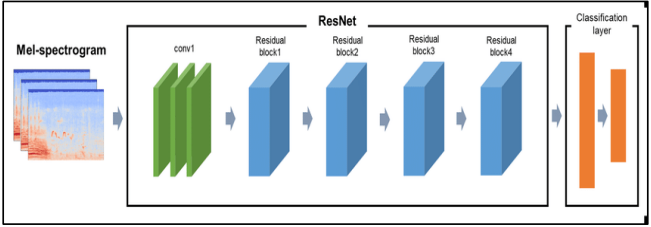
This paper proposes an end-to-end solution to address spoof-aware automatic
speaker verification (ASV) by introducing a Deep Reliable Spoof-Aware Speaker-Verification (DR-SASV) system. The proposed system allows the
target audio to pass through a “spoof aware” speaker verification model
sequentially after applying a convolutional neural network (CNN)-based spoof
detection model. The suggested system produces encouraging results after
being trained on the ASVSpoof 2019 LA dataset. The spoof detection model
gives a validation accuracy of 96%, while the transformer-based speech
verification model authenticates users with an error rate of 13.74%. The system
surpasses other state-of-the-art models and produces an EER score of 10.32%.
×
EADDA: Towards Novel and Explainable Deep Learning for Early Alzheimer’s Disease Diagnosis Using Autoencoders
According to the WHO, Alzheimer’s disease (AD) is the seventh most common cause of death worldwide as of 2023. The early identification of AD is difficult, and there are currently no known preventative procedures. It is crucial to develop an accurate computer-aided system for the early detection of AD to help AD patients. One of the most promising areas for the early identification of Alzheimer’s disease is neuroimaging, and early diagnosis is crucial for determining the creation and efficacy of treatment alternatives. To do so, the authors propose a novel architecture which is a Deep-learning centric, computationally efficient and is an integrated Early Alzheimer’s Disease detection system. A joint autoencoder-latent vector-based classification system is proposed. Specifically, a convolutional autoencoder is used to generate a latent vector. This latent vector is further passed through a Latent Classifier module (LCM) to be classified using the Deep Parallel Ensemble (DPE), consisting of 5 base classification models: SVM, Random Forest (RF), Extra-Trees Classifier (ETC), XGBoost (XGB), and Multi-Layer Perceptron (MLP). The system is trained and tested on a 5-class Alzheimer’s dataset consisting of high-resolution MRI images. The proposed system “EADDA” gives a testing accuracy of 86.57%, being the only work exploring and experimenting with the ADNI 5-class dataset.
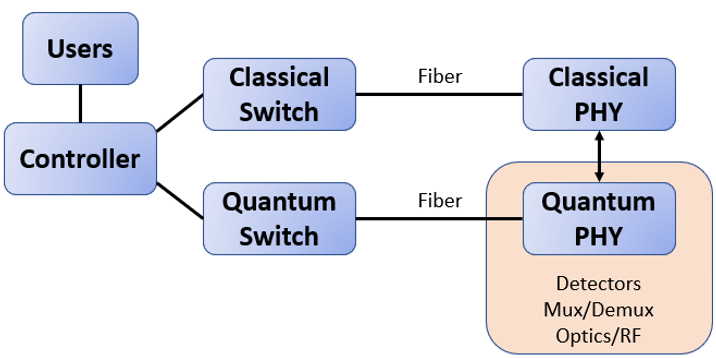
In the recent past, Quantum theory has taken over a plethora of fields like quantum chemistry, quantum optics, and quantum computing. Another such application is Quantum Internet. With the help of quantum physics, the innovative idea of Quantum Internet aims to make communication safe and effective. However, there are several fundamentals that need to be understood before Quantum Internet can be fully realized. Despite the ceaseless scope and potential extent of Quantum Internet, not all remain aware about it and research and experimentation in this field is yet to reach worthwhile levels. In this contribution, we study a plethora of related articles and issues and conduct and advanced survey explaining the importance of Quantum Computing and its need in the modern world. We elicit the advantages and disadvantages of Quantum Internet and explain its working. This review also explains the relation of Quantum Computing with 5G and 6G. We list the various performance parameters of Quantum Internet and explain the parameters that affect its performance.
@book{ResearchAdvancesinNetworkTechnologies,url={https://www.taylorfrancis.com/chapters/edit/10.1201/9781003433958-13/insight-quantum-internet-pratik-kanani-neel-kothari-pooja-vartak-kanchan-dabre-niti-desai-mamta-padole},title = {A review: An insight into Quantum Internet},author = {Kanani, P. and Kothari, Neel},year = {2023},publisher = {CRC Press},}
×
Improving Chronic Kidney Disease Prediction using
ANN with Normalization
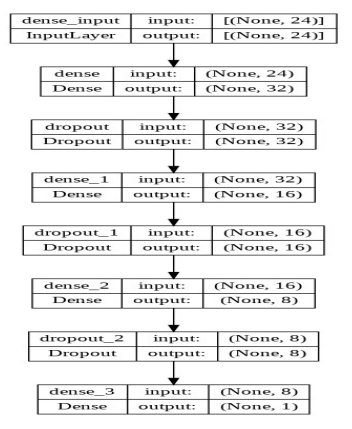
Chronic Kidney Disease (CKD) is one of the most critical diseases in today’s day
and age and its accurate and thorough diagnosis is the need of the hour. This work aims to
accurately predict CKD in a patient with the help of machine learning by developing a robust
Artificial Neural Network model which would vastly benefit the Healthcare industry. It takes into
account every criterion and predicts whether the subject may encounter CKD or not. An empirical
comparison of the efficiency of various machine learning algorithms such as Random Forest
Classifier, Extra Trees Classifier, K-Nearest Neighbors, Gradient Boosting Classifier, Stochastic
Gradient Boosting, Cat Boost Classifier, Light Gradient Boosting Machine, and Decision Tree
Classifier is also portrayed in this research. The algorithms implemented on preprocessed data
gave accuracies of not more than 95%. This work has implemented a modified Artificial Neural
Network which predicted whether a patient has CKD or not with an accuracy of 98%, which
surpassed that of all the other classification algorithms that were compared. The proposed model
may serve as an effective and accurate tool to predict the occurrence of CKD in a patient.
2022
×
Smartphone Based Pothole and Speed-breaker Detection System
Neel Kothari, D. Gada, T. Patwa, Y. Ranawat, and
1 more author
In Smart Innovation, Systems and Technologies(SIST) – ICHCSC 2023, 2022
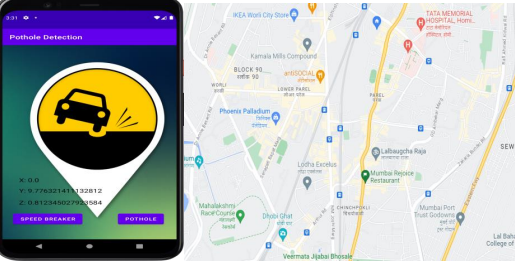
Potholes on roads are a widespread problem, causing damage to
vehicles and endangering lives of drivers. Traditional methods for detecting
potholes involve manual inspections, which are time-consuming and expensive.
This research presents a novel approach to detect potholes on roads using
accelerometer data. Accelerometer data can be collected using low-cost sensors
and processed using machine learning algorithms to identify potholes
automatically. The proposed approach involves collecting accelerometer data
from a vehicle as it drives over a road surface. The data is processed using SVM
to identify features that are indicative of potholes, such as sudden changes in
acceleration or vibrations. The algorithm is trained and tested on secondary and
primary datasets using labeled data to detect potholes accurately. Experimental
results during training and testing on primary data show that the SVM is effective
at detecting potholes with an accuracy of 93.3 %. Pothole detection could be
faster and cheaper with this method, leading to better roads and less risky driving
conditions for drivers. This research demonstrates the feasibility of using
accelerometer data to automate pothole detection, providing a promising avenue
for future research in this area.
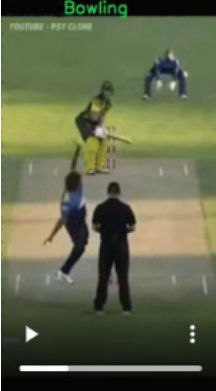
Generation of highlights is the method of pulling
the most intriguing clips from a sports video. It is an important
activity for sports broadcasters, especially for the sport of cricket.
This research proposes a simple yet efficient approach for the
automated generation of Cricket highlights from the entirety of
a match video by key event detection. The proposed approach
comprises of a score extraction technique with the help of
the EAST model and OCR (Optical Character Recognition)
techniques which helps detect the keyframes, followed by an
action recognition pipeline using CNN and LSTM applied on
those detected keyframes. The Observed outcomes exemplify
that the precision of the proposed method for automated cricket
highlights generation is productive and valuable.
 ×Pixels in Puzzlement: Towards Hill Cipher based Image Encryption[ACCEPTED]:NFSU Journal of Cyber Security and Digital Forensics, 2024